If you haven’t already, check out Arun Ulag’s hero blog “FabCon and SQLCon 2026: Unifying databases and Fabric on a single, complete platform” for a complete look at all of our FabCon and SQLCon announcements across both Fabric and our database offerings.
At Microsoft, we’ve always believed that platforms win when ecosystems thrive. Each year, customers, partners, and data professionals come together at FabCon Atlanta to see how Microsoft Fabric is evolving—not as a standalone product, but as a connected platform amplified by its ISV and SI ecosystem.
The power of Fabric does not come from any single workload alone. It comes from what happens when industry leading ISV solutions are accessible directly from Fabric, operate on data in OneLake, and interoperate seamlessly with first‑party services. This is how customers move faster: less data movement, fewer integration gaps, consistent governance, and a unified experience across analytics, AI, and industry solutions.
Our partners are not simply connecting to Fabric; they are building on Fabric. They are embracing our workload extensibility model, open standards, and shared data foundation to deliver solutions that feel like a natural extension of the platform. That’s why we are excited to announce the latest batch of ISV workloads for Microsoft Fabric.
One example of how ISVs are extending Microsoft Fabric into high‑impact operational domains is Auger, a fast‑growing supply chain intelligence platform. Auger is building on Microsoft Fabric with data written natively to Microsoft OneLake, enabling customers to apply Fabric analytics, AI, and governance directly to complex supply chain decisions—without duplicating data or introducing parallel systems. By combining Fabric’s unified data foundation with Auger’s domain‑specific supply chain reasoning, organizations can move beyond analytics to support consistent, explainable operational decisions such as inventory optimization, supplier risk mitigation, and scenario planning.
Learn more about Auger in this deep-dive blog post.
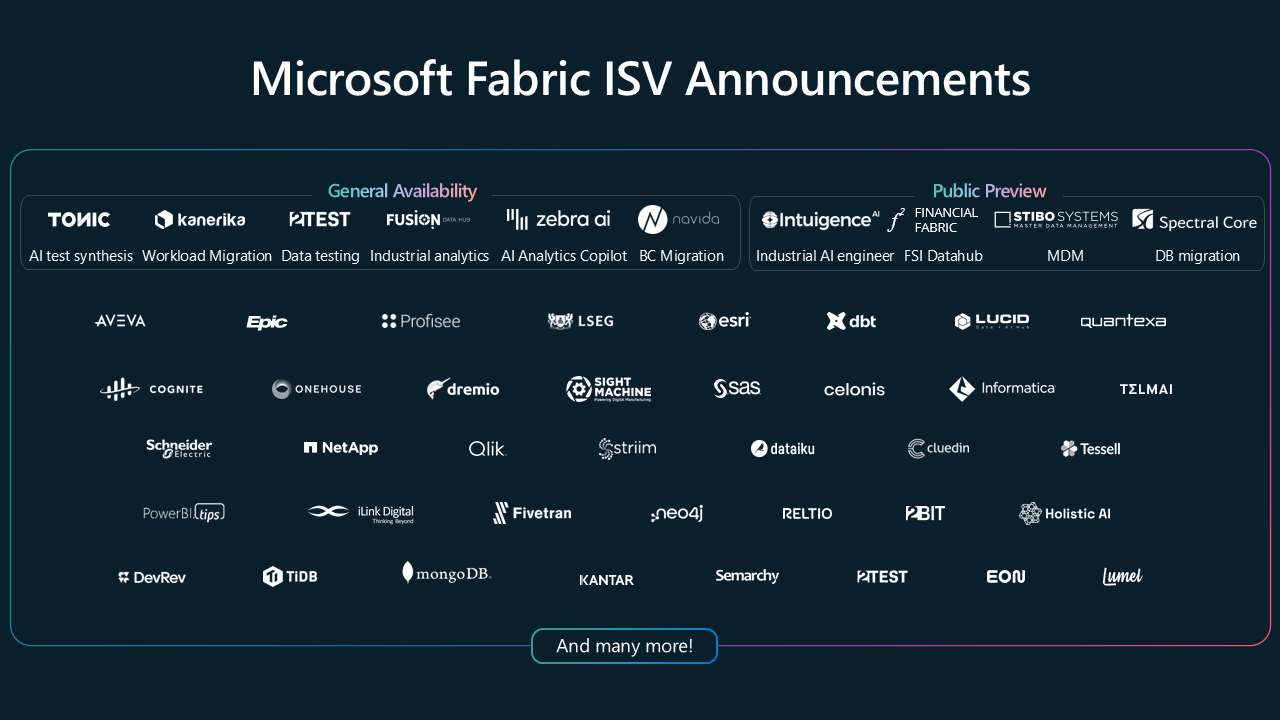
Figure: Microsoft Fabric ISV Ecosystem
These announcements reflect a growing ecosystem—one where ISVs and partners are helping customers unlock more value from Fabric by delivering end‑to‑end, production‑ready solutions that are integrated by design—not bolted on after the fact.
Generally available Microsoft Fabric Workloads
Fusion Data Hub — Industrial Analytics (Generally Available)
Fusion Data Hub on Microsoft Fabric reaches GA at FabCon Atlanta, delivering industrial analytics workload on Fabric. The workload unifies operational data from historians, DCS, SCADA systems, and IoT sensors into OneLake, creating a single analytical foundation for energy and industrial customers.
With GA, customers can deploy Fusion Data Hub to:
- Analyze operational and time‑series data alongside enterprise data in Fabric.
- Apply advanced analytics and AI to industrial operations without moving data.
- Scale analytics for oil & gas and heavy‑industry use cases on a governed platform.
This milestone demonstrates how Fabric can support mission‑critical, industry‑specific workloads that demand scale, reliability, and performance.
Check out the Fusion in Fabric demo video.
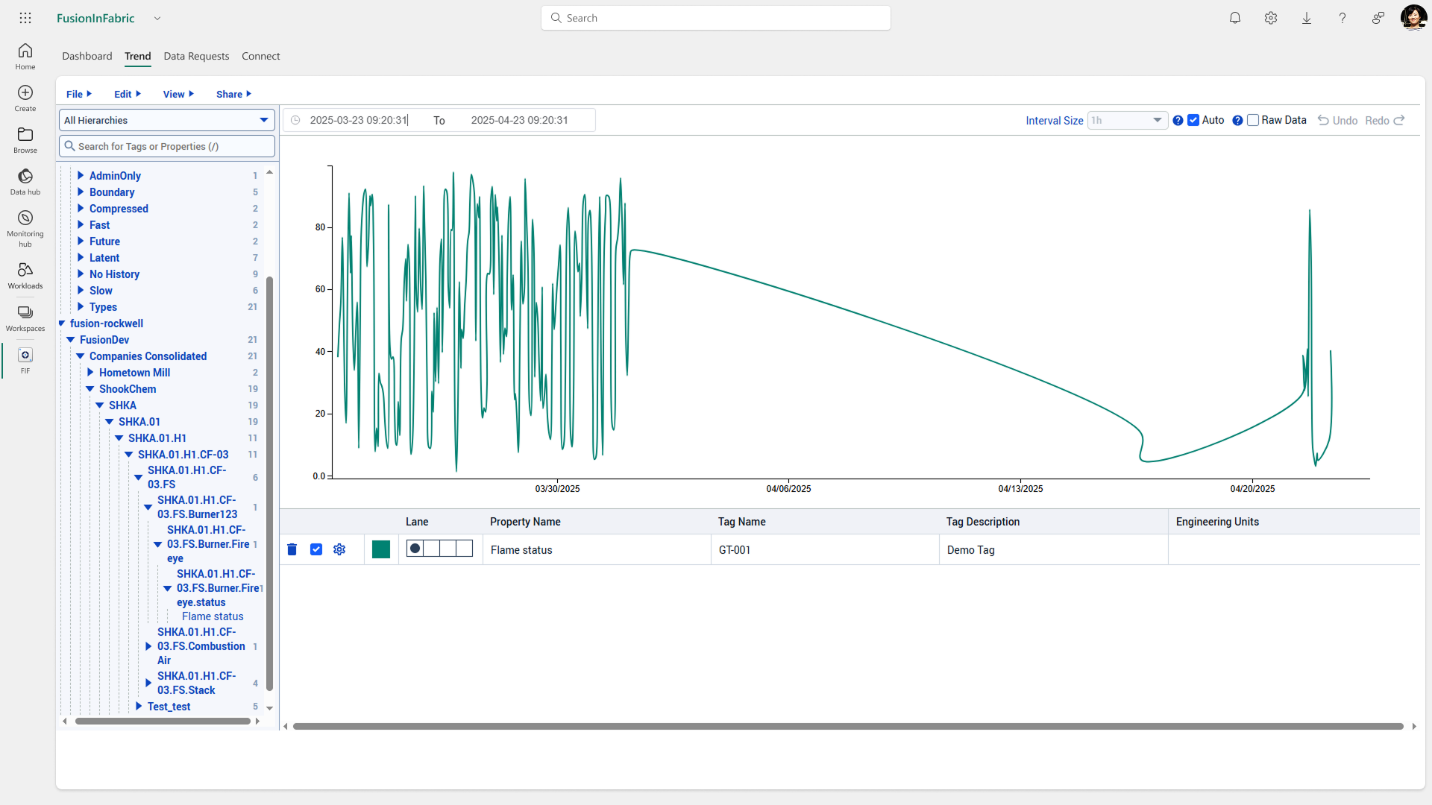
Figure: Fusion Data Hub on Microsoft Fabric
Zebra AI — Advanced reporting built for Fabric models (Generally Available)
Zebra AI delivers rich financial and operational reporting experiences tightly integrated with Fabric semantic models. Customers can:
- Build executive‑ready financial and operational reports on OneLake data.
- Leverage consistent metrics across BI and analytics workflows.
- Extend Fabric models with advanced visualization patterns.
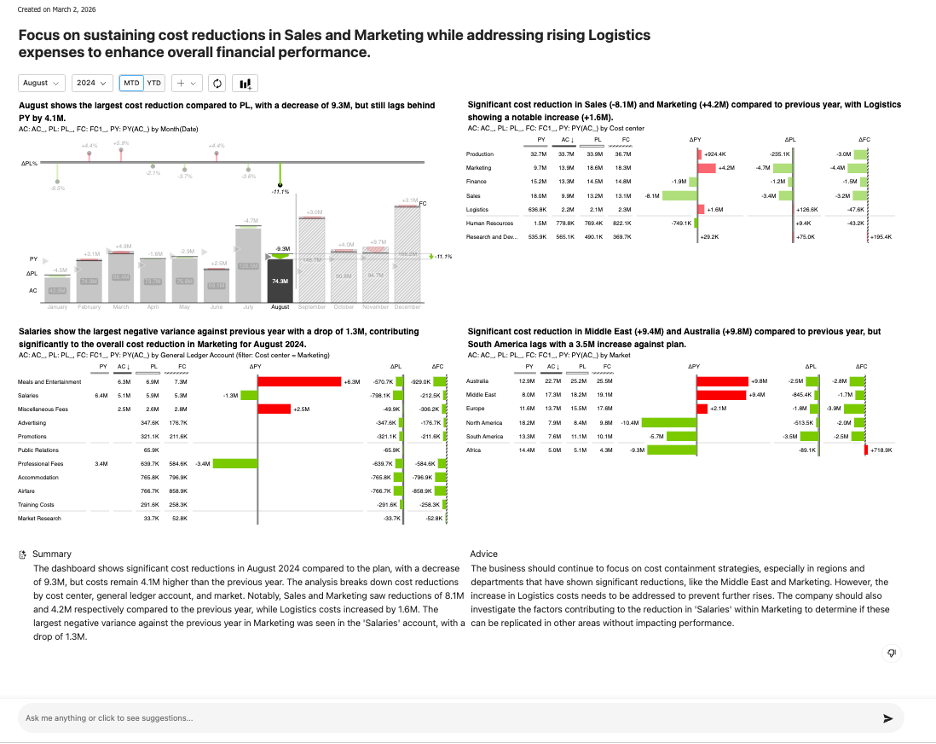
Figure: Zebra AI on Microsoft Fabric
“Zebra AI Workload for Fabric has been a true game changer for us. Critical, recurring analytical processes that once consumed significant time and resources across multiple platforms are now completed in a fraction of the time. The gains in efficiency, speed, and insight have been remarkable.”
– Pablo Trachsler, Head of Group Re Business Development & Innovation, Zurich Insurance
Zebra AI highlights how ISVs are enhancing decision‑making experiences, not just data pipelines. Check out a short video demo of Zebra AI running in Fabric or jump right in with this quick start guide.
Tonic.ai — Redacts and synthesizes unstructured data for analytics and AI (Generally Available)
Tonic.ai Textual provides anonymization and synthesis solution for textual data. Designed for organizations working with sensitive data, Tonic enables teams to unlock analytics and AI scenarios while maintaining privacy, security, and compliance.
Customers can:
- Generate high‑fidelity synthetic data directly from OneLake.
- Enable broader access to data for analytics, testing, and AI development.
- Meet regulatory and privacy requirements without slowing innovation.
Tonic’s GA underscores the importance of responsible data access as analytics and AI adoption accelerates. Check out this video to learn how to use Tonic Textual in Fabric.
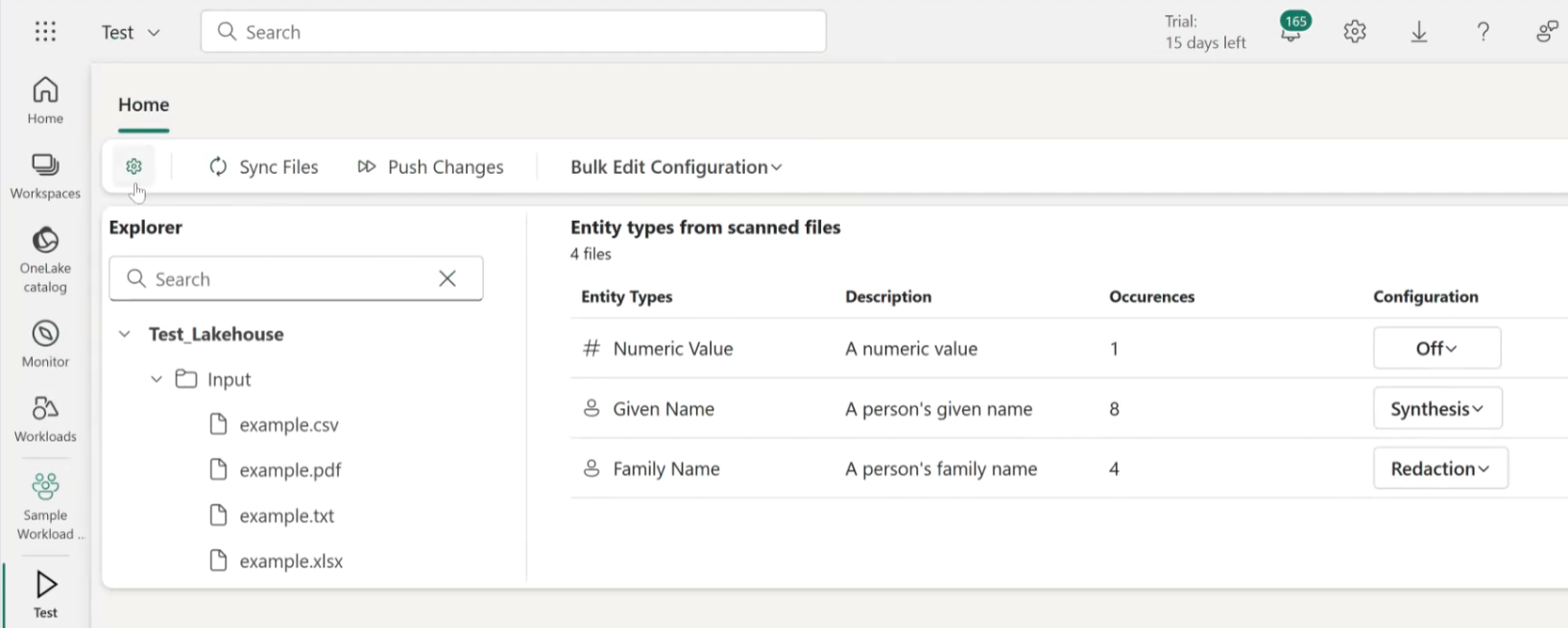
Figure: Tonic.ai on Microsoft Fabric
Navida BC2Fab — Data replication from Business Central to Fabric (Generally Available)
BC2Fab enables users to mirror their Microsoft Business Central data to Microsoft Fabric in near real time. Instead of putting additional load on the production system, BC2Fab uses a pull-based mechanism on a read-only replica of the Business Central database, ensuring efficient, scalable, and consistent synchronization.
Customers can:
- Mirror Business Central data in near real time with minimal configuration.
- Handles tables with millions of entries with ease and speed.
- Automatic translation of fields, option values etc. into all supported languages.
BC2Fab enables advanced features such as automatically generating semantic models, including support for custom objects defined in Business Central. By providing a managed solution in Fabric, BC2Fabric significantly shortens the path from Business Central data to reports and insights.
Check out this simple walkthrough video and get started with this quick-start guide.
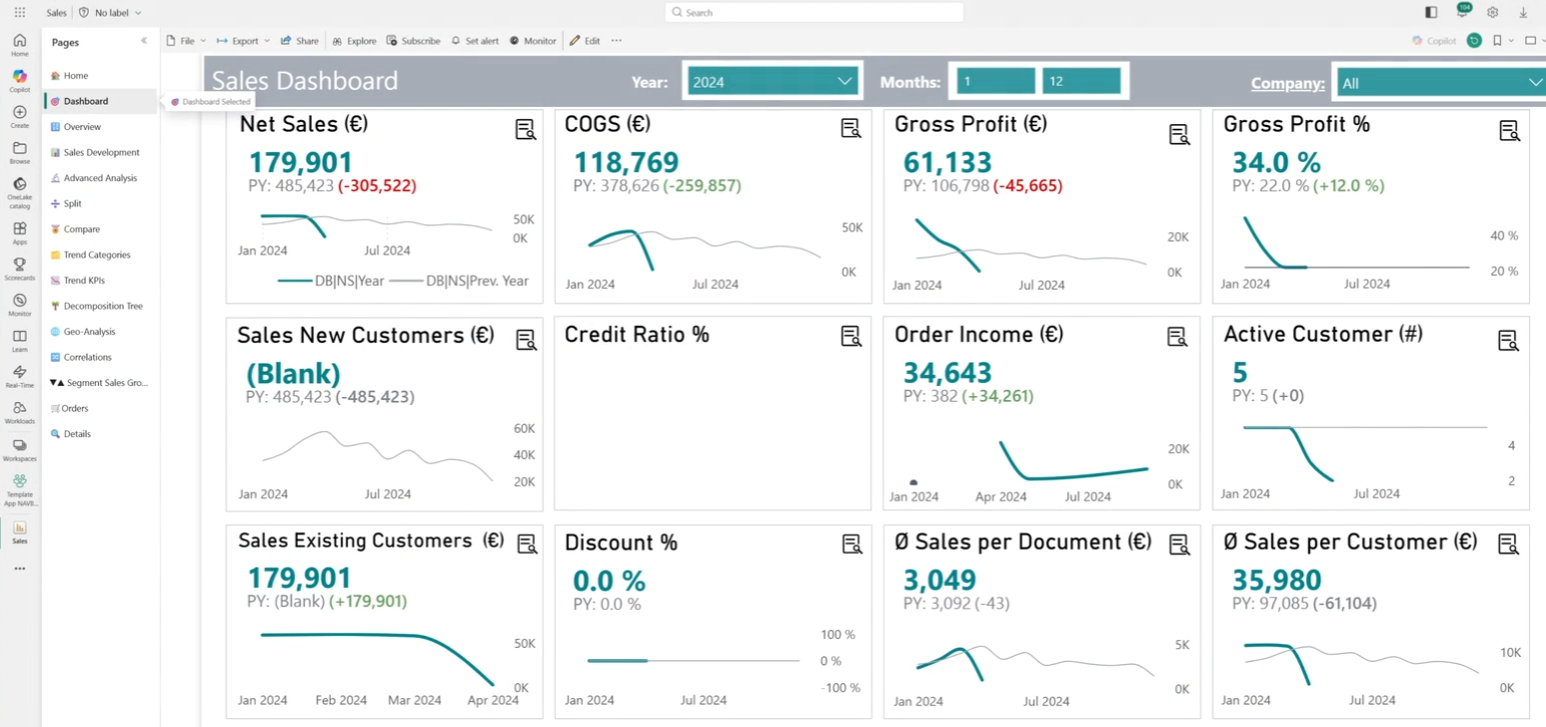
Figure: Navida BC2Fab on Microsoft Fabric
2Bit 2TEST — Data quality and testing, built into Fabric (Generally Available)
2TEST is a testing workload designed to help teams validate the quality and reliability of their data and Power BI semantic models. Don’t know where to start? Using AI, 2TEST can analyze your data and models and autogenerate highly relevant tests in seconds.
Customers can:
- Integrate data testing directly into Fabric workflows
- Detect data issues earlier across ingestion and transformation stages
- Increase trust in analytics and AI outputs by validating semantic models
2TEST reinforces the importance of data reliability as a first‑class concern in analytics platforms.
Learn how 2TEST generates and tests data in your Lakehouse and how it tests PowerBI semantic models.
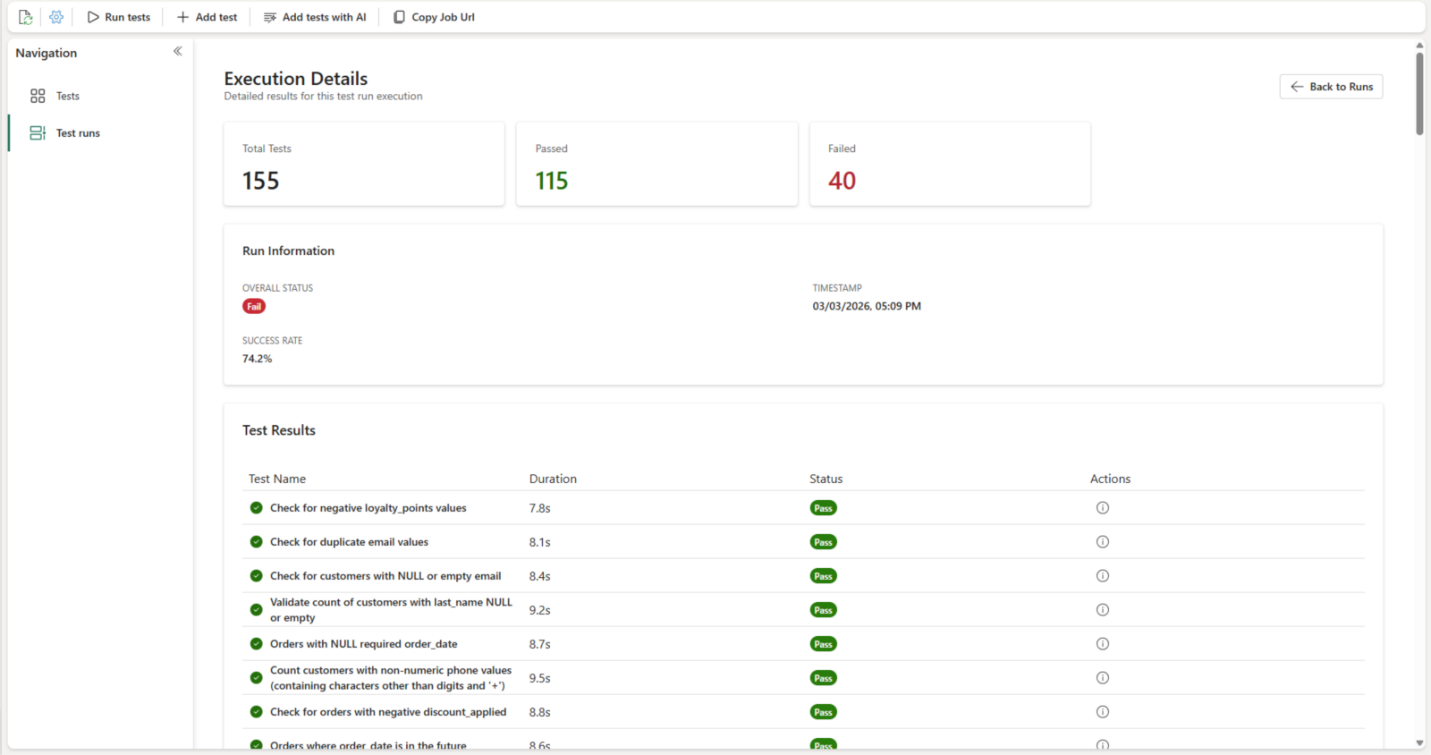
Figure: 2TEST on Microsoft Fabric
Kanerika — Karl AI agent and Workload migration for Fabric (Generally Available)
Kanerika is making two distinct workloads on Fabric generally available:
- Workload Migration — Kanerika’s Azure to Fabric workload enables organizations to migrate Azure Data Factory and Azure Synapse Analytics pipelines to Microsoft Fabric in real-time. Learn how Kanerika enables simple migrations in this demo video.
- Karl AI Agent — Karl is an AI agent for data analysis that lets you explore data using plain English. It uses AI to translate your questions into SQL, run queries, generate visuals, and explain results—no technical skills needed. It’s like having a data analyst available 24/7. Check out these demo videos of Karl for data insights and Karl the statistician.
With Kanerika, Fabric users can easily migrate their legacy workloads to Fabric and use the data with Karl AI Agents to gain insights in natural language.
Fabric Workloads in Preview
The momentum of our ISV ecosystem is incredible. The following ISVs are launching their capabilities on Fabric in preview—give them a try.
Stibo Systems — Master data management meets OneLake (Preview)
Stibo Systems Data as a Service (DaaS) MDM workload on Fabric offers a simple approach to converting enterprise data locked in an MDM system into a consumable analytics and AI ready data directly in OneLake. The workload bridges the gap between high quality governed data traditionally locked in an MDM system to exposing it as a cloud native data service enabling customers to automate business workflows, accelerate time to insights and power multi-agent workflows.
Learn about Stibo’s MDM DaaS on Fabric and watch the demo video of Stibo running in Fabric.
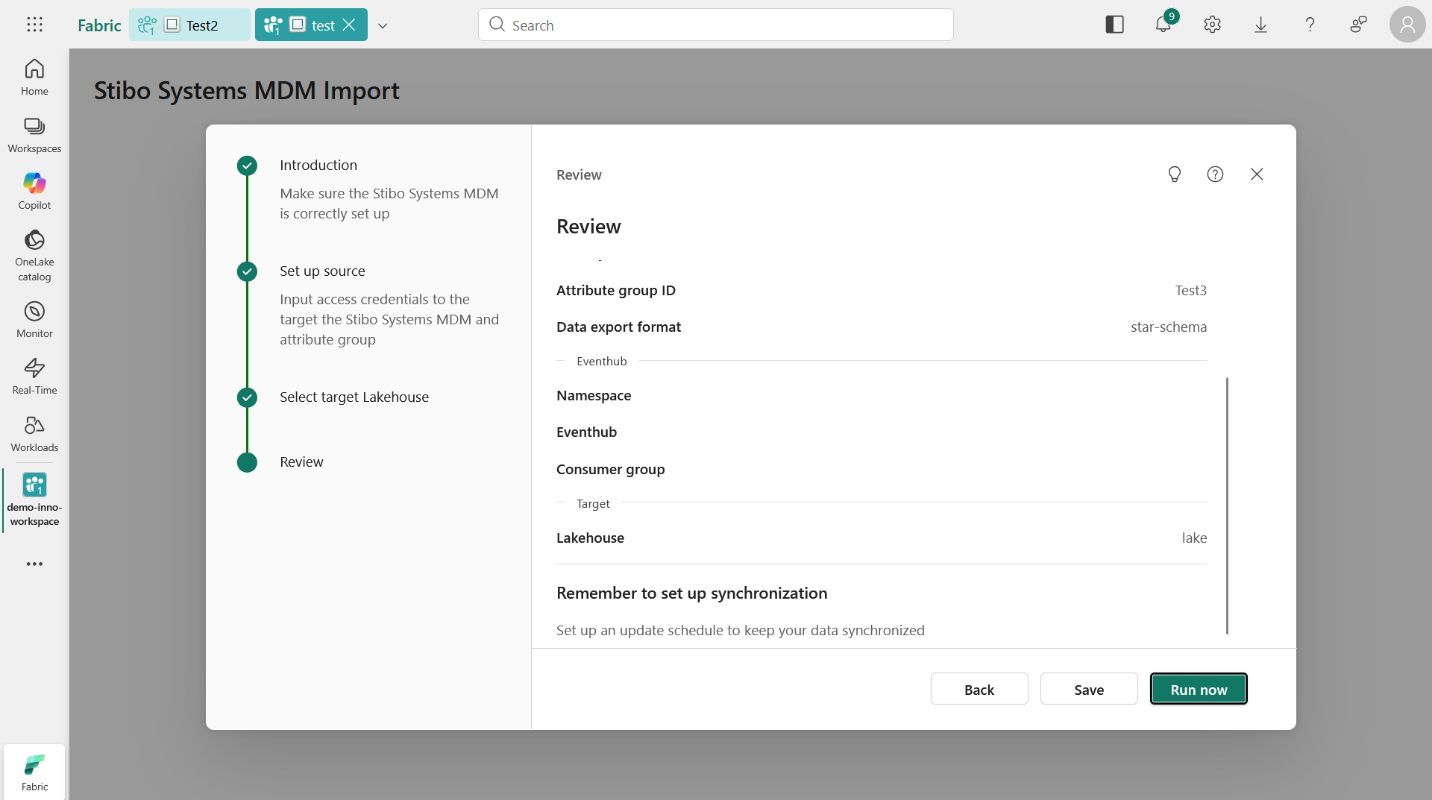
Figure: Stibo Systems on Microsoft Fabric
Intuigence.AI — Synthetic AI Engineers for Industrial Operations (Preview)
Intuigence workload for Fabric offers several types of AI-based engineers, like chemical, mechanical and plant support engineers, that automate industrial workflow tasks. With 24/7 operations, human-like intelligence, multilingual capabilities, and UX, these agents are revolutionizing how work gets done. Check out this demo video to learn more.
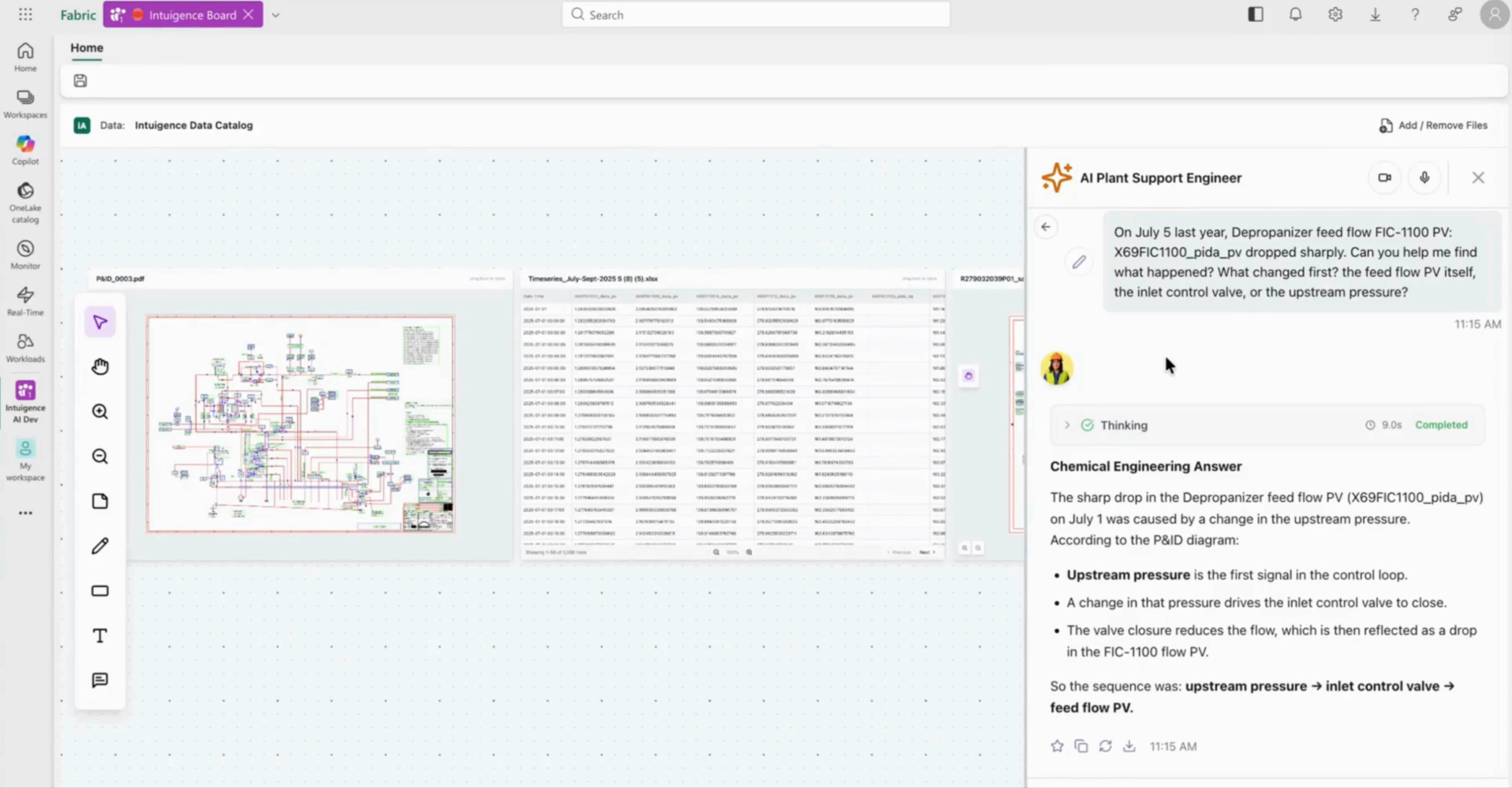
Figure: Intuigence.AI on Microsoft Fabric
Financial Fabric — Capital Markets Data Hub (Preview)
Financial Fabric’s Capital Markets data hub unifies fragmented trading, risk, and operational data into a governed, analytics-ready foundation for institutional investors. Fabric customers have access to over 200 capital-markets providers and 10,000+ datasets organized within a structured financial taxonomy. Users can securely access a unified view of their data via web applications, Excel, Power BI, APIs, and AI experiences.
Learn how you can start using Capital Markets Data Hub for Fabric today.
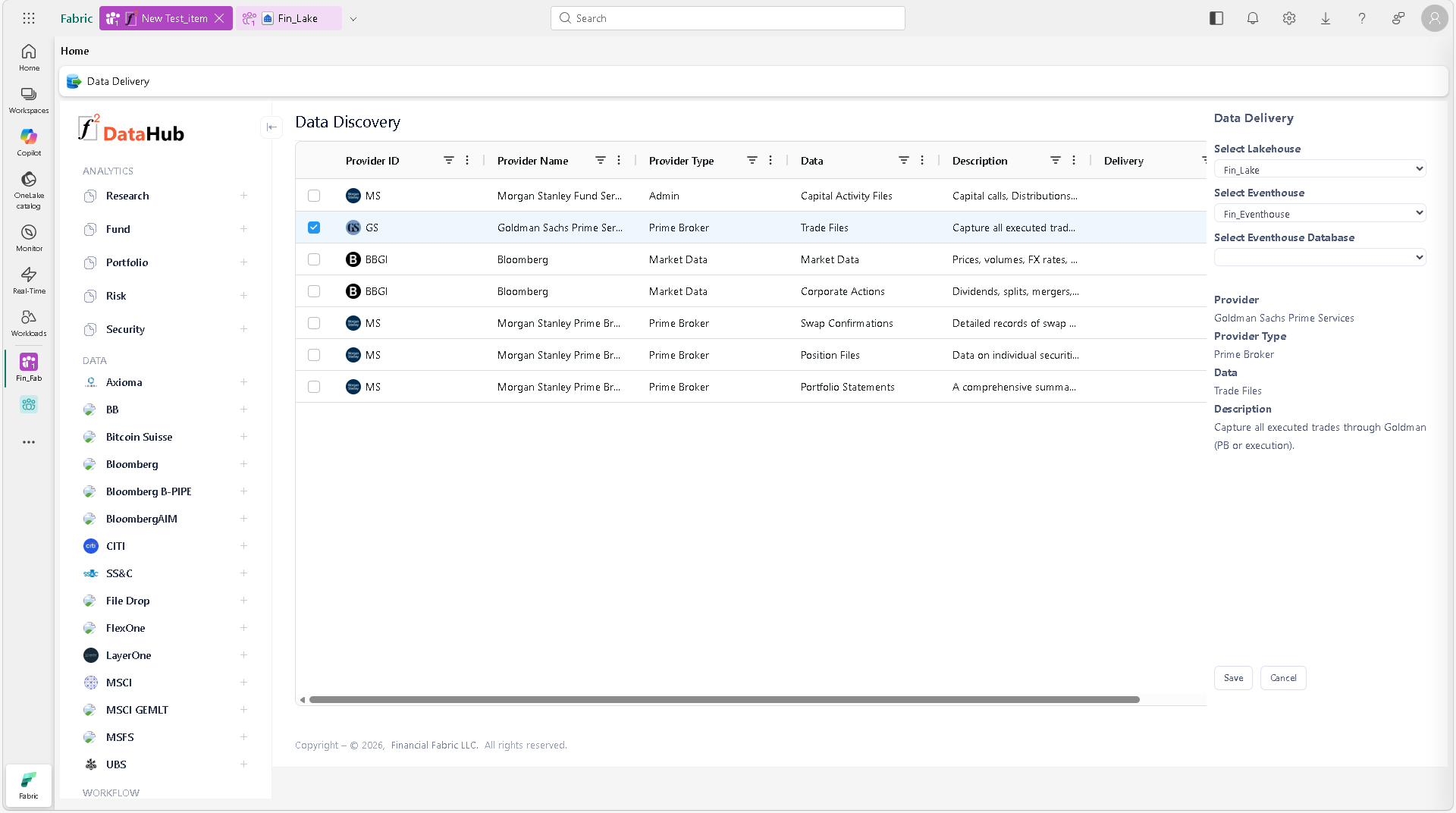
Figure: Financial Fabric on Microsoft Fabric
Spectral Core — Accelerating data warehouse migration to Fabric (Preview)
Spectral Core’s self-service migration workload streamlines data migration and SQL code translation from many popular databases and data warehouses to Fabric, reducing migration time from weeks to hours. Omni Loader automates data loading, schema mapping, and bulk transfers, while SQL Tran provides intelligent SQL translation, converting your existing SQL code, stored procedures, and functions into Fabric-compatible syntax. See Spectral Core in action.
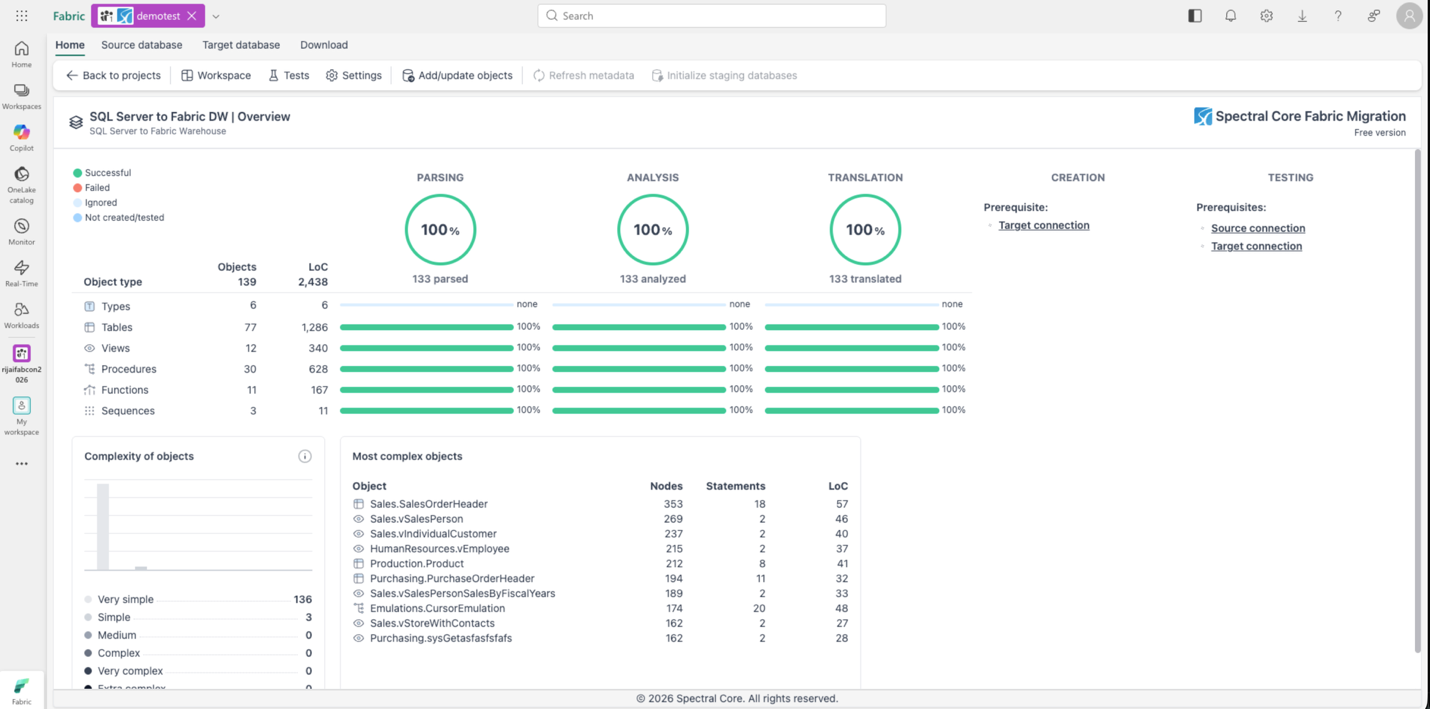
Figure: Spectral Core on Microsoft Fabric
Microsoft OneLake integrations
Microsoft OneLake serves as a centralized data repository designed to simplify and standardize data access across organizations. Tables are stored in either Apache Iceberg or Delta Lake open table format. While certain engines may require a particular format, OneLake facilitates seamless interoperability by automatically converting between both formats. OneLake also provides seamless integration with a variety of query engines, data platforms, and AI tools by supporting widely adopted table APIs – Apache Iceberg REST compatible and Databrick Unity Catalog.
I’m excited to share several new integrations with OneLake:
Clickhouse — Clickhouse Cloud now supports data source integration with OneLake Iceberg-based Table APIs in the “Fast” Release Channel, will be available soon in the “Regular” release channel. This integration allows Clickhouse Cloud customers on Azure to query tables stored in OneLake – tables either written as Iceberg or converted to Iceberg from Delta Lake by OneLake’s automatic table virtualization.
Learn how to configure OneLake catalog with Clickhouse and try it out for yourself.
Dremio — the lakehouse platform designed and built for AI and agents has made OneLake support generally availability. Easily connect to OneLake from the Enterprise and Cloud version to access data residing in OneLake. Get started by configuring OneLake in Dremio.
Support to fetch data from Dremio using a Mirrored Dremio Catalog in OneLake will be launching soon.
Ryft — an intelligent Iceberg lakehouse manager is announcing the preview of its lakehouse observability capability with OneLake. Fabric users can now easily monitor how each Iceberg table is used across their engines, tracking table sizes, ingestion rates, query behavior, and schema changes. Learn how to configure Ryft to connect to OneLake.
Onehouse — an open, unified data lakehouse platform running natively in Azure is making its OneSync integration with OneLake Security available in public preview. OneSync provides automated, permission translation from AWS Glue (via Lake Formation) and Databricks Unity Catalog to OneLake Security. Check out this short demo video to see it in action. The integration allows customers to not only unify their data, but also their security policies ensuring consistent enforcement in Microsoft Fabric.
Learn how to configure OneSync with OneLake Security.
Why these matters
What excites me most is not just the number of announcements, but what they collectively represent. Our ISV partners are:
- Building native Fabric workloads that accelerate analytics and AI projects.
- Embracing open standards to ensure interoperability and provide choice.
- Delivering industry‑specific and domain‑focused solutions that customers can deploy faster to solve real-world problems.
This is exactly how we envisioned the Fabric ecosystem evolving.
To our partners: thank you for your continued investment and collaboration. To our customers: I encourage you to explore these solutions during FabCon Atlanta, attend partner sessions, and share your feedback as we continue building the most open and intelligent data platform together.
I can’t wait to see what we build next.
Related blog posts
The power of the Microsoft Fabric ecosystem: ISVs building natively on Fabric
Fabric Data Factory at FabCon Atlanta: Built for modern data integration
If you haven’t already, check out Arun Ulag’s hero blog “FabCon and SQLCon 2026: Unifying databases and Fabric on a single, complete platform” for a complete look at all of our FabCon and SQLCon announcements across both Fabric and our database offerings. At FabCon Atlanta, we’re doubling down on a simple truth: every successful analytics, … Continue reading “Fabric Data Factory at FabCon Atlanta: Built for modern data integration”
Introducing Planning in Microsoft Fabric IQ: From historical data to forecasting the future
If you haven’t already, check out Arun Ulag’s hero blog “FabCon and SQLCon 2026: Unifying databases and Fabric on a single, complete platform” for a complete look at all of our FabCon and SQLCon announcements across both Fabric and our database offerings. For years, organizations have invested heavily in analytics to understand what happened in … Continue reading “Introducing Planning in Microsoft Fabric IQ: From historical data to forecasting the future”
Microsoft Fabric
Accelerate your data potential with a unified analytics solution that connects it all. Microsoft Fabric enables you to manage your data in one place with a suite of analytics experiences that seamlessly work together, all hosted on a lake-centric SaaS solution for simplicity and to maintain a single source of truth.
Get the latest news from Microsoft Fabric Blog
This will prompt you to login with your Microsoft account to subscribe
Visit our product blogs
View articles by category
- Activator
- AI
- Announcements
- Apache Iceberg
- Apache Spark
- Community
- Community Challenge
- Data Engineering
- Data Factory
- Data Lake
- Data Science
- Data Warehouse
- Databases
- Developer
- Fabric IQ
- Fabric ML
- Fabric platform
- Fabric Public APIs
- Lakehouse
- Machine Learning
- Microsoft Fabric
- Monthly Update
- OneLake
- Power BI
- Power BI reports
- Real-Time Intelligence
- Roadmap
- semantic model
- Uncategorized
View articles by date
- March 2026
- February 2026
- January 2026
- December 2025
- November 2025
- October 2025
- September 2025
- August 2025
- July 2025
- June 2025
- May 2025
- April 2025
- March 2025
- February 2025
- January 2025
- December 2024
- November 2024
- October 2024
- September 2024
- August 2024
- July 2024
- June 2024
- May 2024
- April 2024
- March 2024
- February 2024
- January 2024
- December 2023
- November 2023
- October 2023
- September 2023
- August 2023
- July 2023
- June 2023
- May 2023
- April 2023
- March 2023
- February 2023
- January 2023
- December 2022
- November 2022
- October 2022
- September 2022
- August 2022
- July 2022
- June 2022
- May 2022
- April 2022
What's new
- Microsoft 365
- Games
- Surface Pro 9
- Surface Laptop 5
- Surface Laptop Studio
- Surface Laptop Go 2
- Windows 11 apps
Microsoft Store
Education
- Microsoft in education
- Devices for education
- Microsoft Teams for Education
- Microsoft 365 Education
- Office Education
- Educator training and development
- Deals for students and parents
- Azure for students
Business
- Microsoft Cloud
- Microsoft Security
- Azure
- Dynamics 365
- Microsoft 365
- Microsoft Advertising
- Microsoft Industry
- Microsoft Teams
Developer & IT
- Developer Centre
- Documentation
- Microsoft Learn
- Microsoft Tech Community
- Azure Marketplace
- AppSource
- Microsoft Power Platform
- Visual Studio
Company
- © 2026 Microsoft