If you haven’t already, check out Arun Ulag’s hero blog “FabCon and SQLCon 2026: Unifying databases and Fabric on a single, complete platform” for a complete look at all of our FabCon and SQLCon announcements across both Fabric and our database offerings.
The enterprise-grade JDBC driver enables secure, flexible, and performant connectivity to Spark SQL workloads running in Microsoft Fabric, using Fabric’s Livy APIs as the execution layer.
Why this matters
JDBC is a widely used standard for connecting Java applications to data platforms. As Apache Spark remains central to large‑scale data processing, organizations need simple, reliable ways to integrate Spark workloads with existing applications and BI tools.
The Microsoft JDBC Driver for Microsoft Fabric Data Engineering meets this need by enabling developers, data engineers, and administrators to access Fabric Spark workloads through the familiar JDBC interface, while preserving enterprise‑grade security and governance.
Now, the driver is production‑ready and can be confidently used for mission‑critical, enterprise‑scale data engineering workloads in Microsoft Fabric.
The following example provides a quick demonstration of how to set up this driver in DbVisualizer and run a Spark SQL query against your lakehouse data:
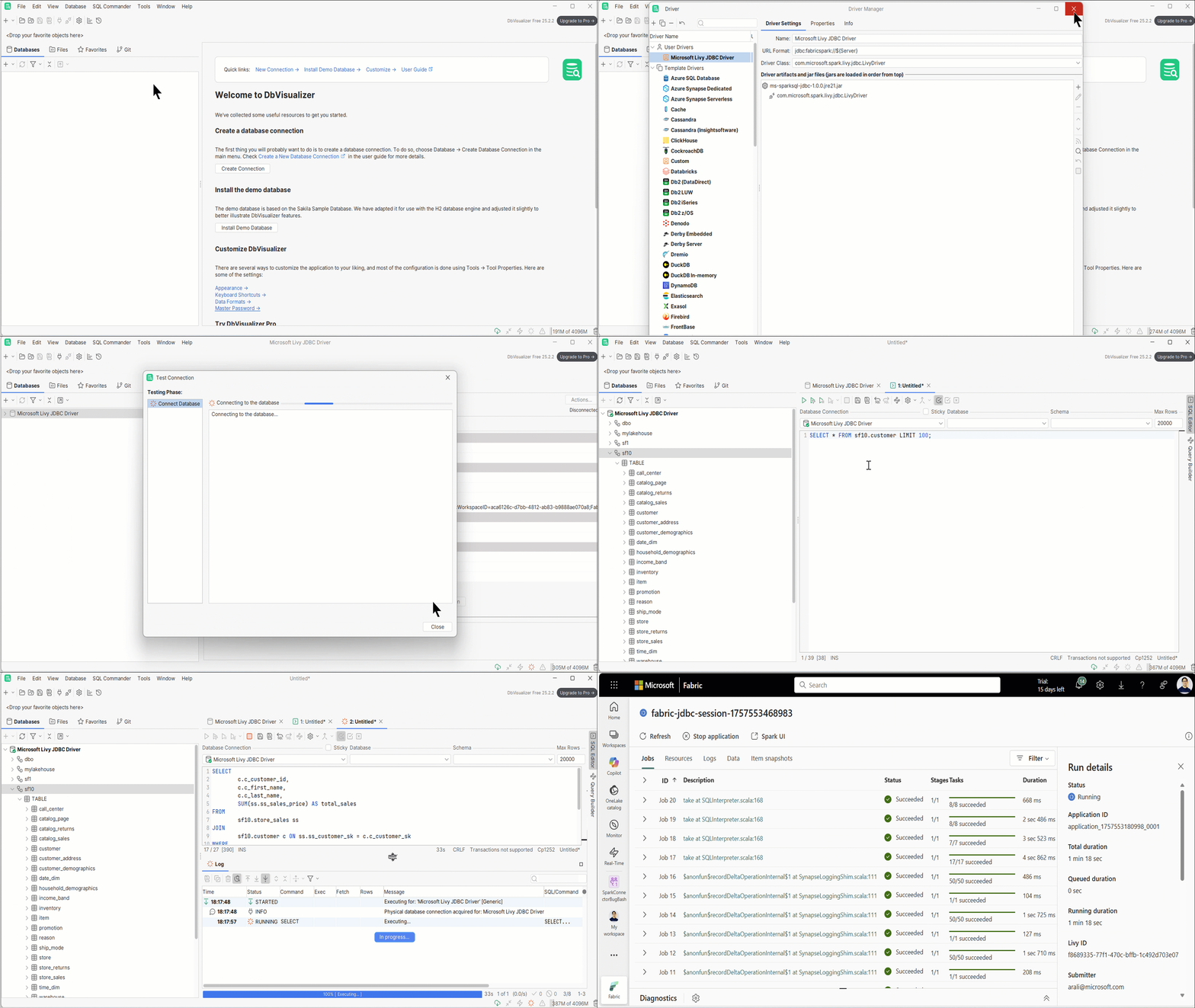
Figure: The DbVisualizer main menu, highlighting options for managing databases, creating connections, installing a demo database, and customizing the application.
Deep integration with Fabric Data Engineering
The JDBC driver is purpose‑built for Fabric Data Engineering, offering deep integration with key Fabric capabilities, including:
- Native access to Lakehouse data in OneLake.
- Support for executing jobs using Fabric Environment items.
- Ability to apply custom Spark configurations tailored to different workloads.
- Secure execution via Microsoft Fabric Livy APIs.
This ensures that JDBC‑based tools and applications feel like first‑class citizens in the Fabric ecosystem.
Key features
This release includes all preview capabilities, with additional polish and supportability:
- JDBC 4.2 compliant: Works out‑of‑the‑box with Java 11, 17, and 21, and supports popular tools such as DbVisualizer, DBeaver, Tableau, and Power BI (via JDBC).
- Enterprise authentication: Supports multiple Microsoft Entra ID authentication flows, including interactive browser, client credentials, certificate‑based authentication, and access tokens.
- Robust connection pooling: Built‑in pooling with health monitoring, automatic recovery, and HikariCP integration for high‑throughput workloads.
- Native Spark SQL support: Execute Spark SQL statements directly, with comprehensive support for Spark SQL data types, including complex types such as ARRAY, MAP, and STRUCT.
- Performance and resilience: Asynchronous result‑set prefetching, circuit breaker patterns, automatic reconnection, and advanced retry logic help keep applications running smoothly.
- Proxy and logging support: Full HTTP/SOCKS proxy support and configurable logging for enterprise environments.
We’ll continue to invest in performance, security, and developer experience enhancements as Fabric Data Engineering evolves.
We invite you to start using this release today and continue sharing feedback as we build the future of enterprise Spark connectivity in Microsoft Fabric.
To learn more and get started using the Fabric JDBC Driver, please visit: .
Related blog posts
Microsoft JDBC Driver for Microsoft Fabric Data Engineering (Generally Available)
Upgrade your Synapse pipelines to Microsoft Fabric with confidence (Preview)
To modernize workloads on Microsoft Fabric, bringing Synapse pipelines forward is a critical next step.
Fabric notebooks support Lakehouse auto-binding in Git (Preview)
Fabric notebooks now support lakehouse auto-binding when used with Git. It is designed to simplify multi-environment workflows and reduce the operational overhead of managing lakehouse references across development, test, and production workspaces.
Microsoft Fabric
Accelerate your data potential with a unified analytics solution that connects it all. Microsoft Fabric enables you to manage your data in one place with a suite of analytics experiences that seamlessly work together, all hosted on a lake-centric SaaS solution for simplicity and to maintain a single source of truth.
Get the latest news from Microsoft Fabric Blog
This will prompt you to login with your Microsoft account to subscribe
Visit our product blogs
View articles by category
- Activator
- AI
- Announcements
- Apache Iceberg
- Apache Spark
- Community
- Community Challenge
- Data Engineering
- Data Factory
- Data Lake
- Data loss prevention
- Data Science
- Data Warehouse
- Databases
- Developer
- Fabric IQ
- Fabric ML
- Fabric platform
- Fabric Public APIs
- Fabric Workload
- Information protection
- Lakehouse
- Machine Learning
- Microsoft Fabric
- Monthly Update
- OneLake
- Power BI
- Power BI reports
- Real-Time Intelligence
- Roadmap
- Security and Compliance
- semantic model
- Uncategorized
View articles by date
- March 2026
- February 2026
- January 2026
- December 2025
- November 2025
- October 2025
- September 2025
- August 2025
- July 2025
- June 2025
- May 2025
- April 2025
- March 2025
- February 2025
- January 2025
- December 2024
- November 2024
- October 2024
- September 2024
- August 2024
- July 2024
- June 2024
- May 2024
- April 2024
- March 2024
- February 2024
- January 2024
- December 2023
- November 2023
- October 2023
- September 2023
- August 2023
- July 2023
- June 2023
- May 2023
- April 2023
- March 2023
- February 2023
- January 2023
- December 2022
- November 2022
- October 2022
- September 2022
- August 2022
- July 2022
- June 2022
- May 2022
- April 2022
What's new
- Microsoft 365
- Games
- Surface Pro 9
- Surface Laptop 5
- Surface Laptop Studio
- Surface Laptop Go 2
- Windows 11 apps
Microsoft Store
Education
- Microsoft in education
- Devices for education
- Microsoft Teams for Education
- Microsoft 365 Education
- Office Education
- Educator training and development
- Deals for students and parents
- Azure for students
Business
- Microsoft Cloud
- Microsoft Security
- Azure
- Dynamics 365
- Microsoft 365
- Microsoft Advertising
- Microsoft Industry
- Microsoft Teams
Developer & IT
- Developer Centre
- Documentation
- Microsoft Learn
- Microsoft Tech Community
- Azure Marketplace
- AppSource
- Microsoft Power Platform
- Visual Studio
Company
- © 2026 Microsoft